A long table, and what gets carried to it
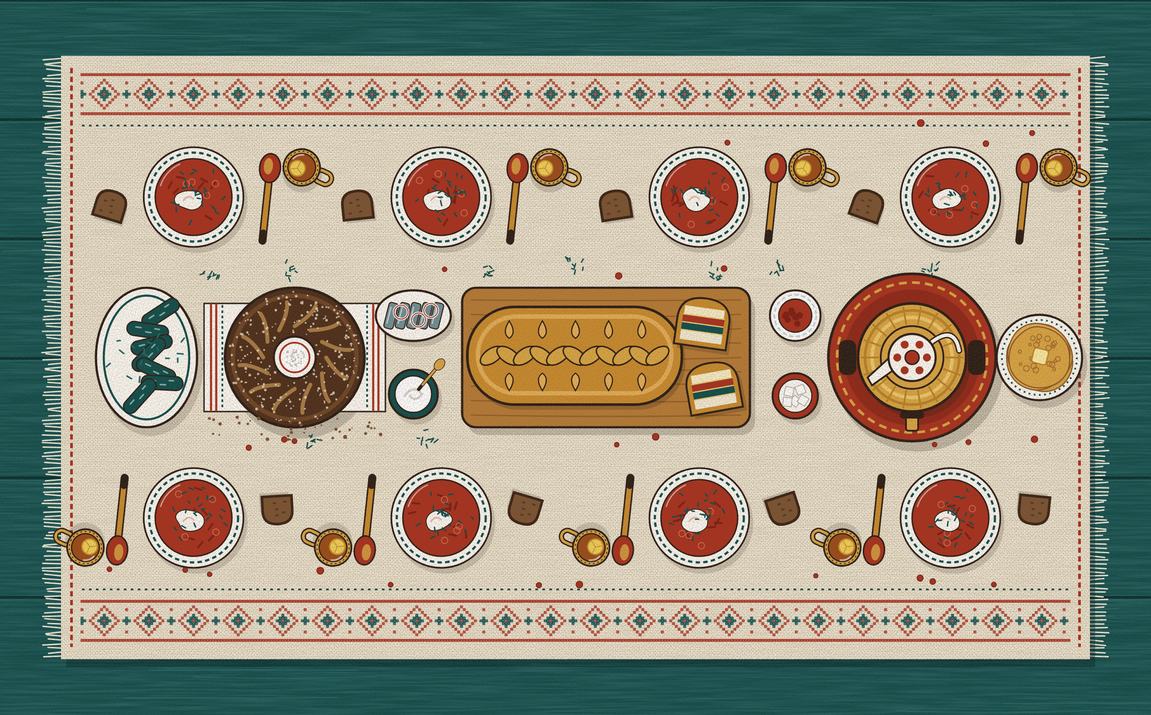
Every family I have cooked with in Russia owns the same piece of furniture, though it never looks the same twice: a table that pulls out, unfolds, or borrows a door from the shed until everyone fits. This notebook is about what gets carried to that table — soup first, always; pies cut in thick slabs; a crowd of small cold dishes; and at the end the tea, which is less a drink than a second sitting.
Who is writing
I am a home cook, not a scholar. I began writing things down in the winter of 2024, after ruining a pot of shchi by rushing it, and the scraps slowly grew into chapters. Dish names are given in their usual Latin spelling with a plain explanation beside them. Quantities are the kind an aunt gives over her shoulder — a fistful, a glass, “until it looks right” — and where I can, I turn those into rough proportions.
How it is arranged
Russian cooking is not one kitchen. A fish pie from the White Sea coast and a honeyed pastry from Kazan have about as much in common as the weather in those two places. So the chapters run partly by dish and partly by map.
- By Region from the Pomor North to Siberia, with a diagram of who cooks what
- Soups shchi, borscht, ukha, solyanka and cold okroshka, bowl by bowl
- Pies & Bread pirogi, the layered kulebyaka, rye loaves and blini
- The Feast Table zakuski, who sits where, toasts as a custom
- Pantry pickles, ferments, preserves and dried mushrooms
- Samovar & Tea how tea is poured and what is set beside it
- Glossary every transliterated word in one place
Lately in the notebook
- Rewrote the rye bread notes after a third starter finally behaved.
- Dried mushrooms, following a wet and generous August.
- Okroshka season. Settled the kvass-or-kefir argument by making both.
- Maslenitsa week: the blini proportions, tested on eleven guests.
- First draft of the regional diagram.
- Kulebyaka, attempt four. The layers held.